

VFD Motor Shaft Voltage Explained
Time: 2026-03-19 15:54:43 Copyfrom: SuZhou Volsun Electronics Technology Co.,Ltd.

Quick Answer
Shaft voltage in VFD-driven motors is mainly caused by high-frequency switching inside the drive. This switching generates common-mode voltage that induces electrical potential between the motor shaft and the frame. When the voltage becomes strong enough, it may discharge through the bearings unless a grounding path is provided.
Why Shaft Voltage Appears in VFD Systems
Modern industrial motors increasingly use Variable Frequency Drives (VFDs) to control speed and improve efficiency. While VFDs provide excellent performance benefits, they also introduce electrical effects that do not exist in traditional motor systems.
One of the most important of these effects is shaft voltage.
Because VFDs operate using high-frequency switching, the electrical waveform supplied to the motor is not a smooth sine wave. Instead, the inverter rapidly turns voltage on and off using pulse width modulation.
This switching process creates common-mode voltage, which can induce electrical charge on the motor shaft.
How Voltage Builds Up on the Shaft
Inside a motor, several components are electrically coupled through capacitance. These include:
- The stator windings
- The rotor
- The motor shaft
- The motor housing
In many cases, the bearing becomes the easiest path to ground.
Why Bearings Become the Discharge Path
Motor bearings sit directly between the rotating shaft and the grounded motor housing. The lubricant film inside the bearing acts as a temporary insulator, but once the voltage exceeds its insulation capability, the electrical charge discharges. These repeated discharges can damage the bearing surfaces over time.
Preventing Damage from Shaft Voltage
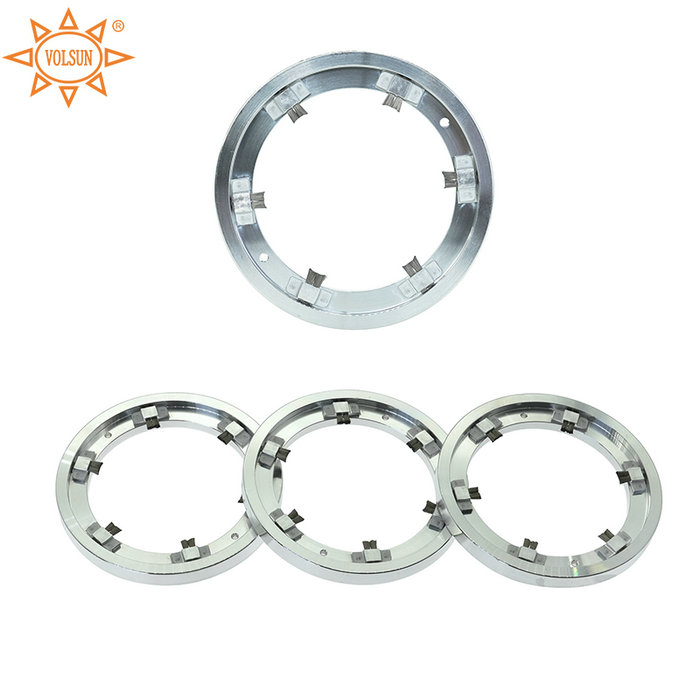
To prevent electrical current from passing through the bearing, engineers often install shaft grounding rings.
A grounding ring provides a low-resistance path that safely transfers stray electrical charge from the shaft to the motor frame. By diverting current away from the bearing, the risk of electrical damage is significantly reduced.
FAQ
1. Is shaft voltage unique to VFD motors?
It is most common in VFD-driven systems because of high-frequency switching.
2. Can shaft voltage damage bearings?
Yes, repeated electrical discharge can cause pitting or fluting.
3. How is shaft voltage usually controlled?
By installing grounding rings or other shaft grounding devices.
KEYWORD:motor shaft grounding
RELATED_ARTICLES:
VFD Motor Shaft Voltage Explained
Why Volsun Shaft Grounding Outperforms Old Carbon Brush Solutions


